


Article: Best Waldorf Toys for Toddlers (Ages 1, 2 & 3) – A Parent's Guide
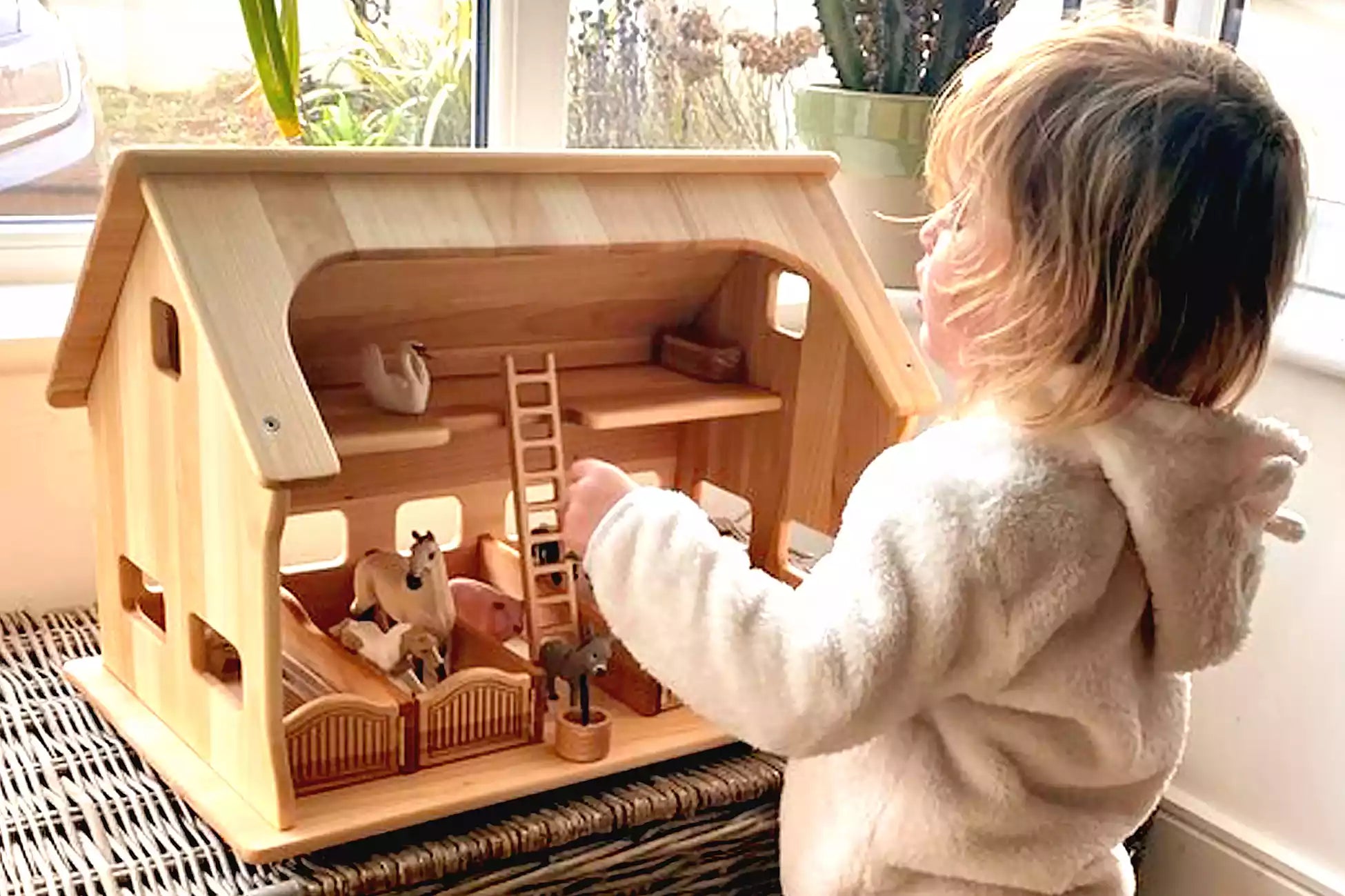
Best Waldorf Toys for Toddlers (Ages 1, 2 & 3) – A Parent's Guide
There is something quietly remarkable about watching a toddler play. Not the frantic, screen-lit kind — but the slow, absorbed kind. A child turning a wooden fruit over in her palm, sniffing it, tasting it, placing it carefully in a basket. A two-year-old who has decided that a carved rabbit is, without question, her best friend.
This kind of play doesn't happen by accident.
It happens when a toy steps back far enough to let a child's imagination step forward. That is, at its heart, what Waldorf-inspired play is about. If you're new to Waldorf philosophy, or simply looking for toys that will actually be played with — not discarded after ten minutes — this guide is for you.
What makes a toy truly "Waldorf"?
Waldorf education, developed in the early 20th century by Rudolf Steiner, sees early childhood as a time of imitation, sensory exploration, and imaginative unfolding — not instruction. Toys designed within this philosophy follow a few clear principles.
Natural materials. Wood, wool, cotton — materials that carry warmth and texture, not plastic smoothness. Open-ended form. A simple wooden figure can be a person, a tree, a character in a story, or simply a beautiful object. A toy that does one thing can only ever be that one thing. Gentle aesthetics. Muted tones, natural grain, soft curves — things that calm rather than overstimulate. Durability. Waldorf toys are meant to last decades, not seasons.

Montessori philosophy shares much of this ground — prioritising real-world materials, child-led discovery, and purposeful simplicity. The two approaches complement each other well, which is why many families draw from both. If you'd like to explore this further, we wrote about Waldorf & Montessori philosophy through play in an earlier article.
Why toddlers need different things at 1, 2, and 3
Toddlerhood spans an enormous developmental arc. A 12-month-old is still exploring the world primarily through touch, taste, and cause-and-effect. By age 3, that same child is narrating imaginary worlds, assigning roles, and negotiating storylines with stuffed animals. The toys that serve them well must grow with them.
Best Waldorf toys for 1-year-olds
At this age, everything is an invitation to explore. A one-year-old's hands are busy learning weight, texture, temperature, and shape. The best toys are ones that respond honestly to touch — that feel different from each other, that have mass and grain and imperfection. What to look for: simple shapes that fit in small hands, sensory contrast, things that can be sorted or carried, and non-toxic finishes above all else.
The Wooden Fruits Play Set is a favourite for this age. Each piece is hand-sanded to a silk-smooth finish and painted with child-safe colours — the kind of toy that rewards handling. Little ones spend long stretches simply moving the fruits from one place to another, which is, developmentally speaking, exactly what they should be doing.
Avoid toys with small parts, sharp edges, or anything that requires batteries. At one year, less truly is more.

Best Waldorf toys for 2-year-olds
Two-year-olds are beginning to tell stories — even if those stories are wordless and fleeting. They will spend twenty minutes moving a small wooden figure from one imagined place to another. They notice relationships between objects. They begin to imitate the world they see around them.
What to look for: simple figures — animals, families, natural forms — objects that suggest a world without defining it completely, and toys with a sense of character that the child can project onto.
The Wooden Rabbit Family Set is beautifully suited to this stage. The figures are simple enough to become anything — a family going for a walk, animals in a meadow, characters in a bedtime story the child has made up herself. We've seen children carry these in their pockets for weeks.
Don't be surprised if your two-year-old uses Waldorf toys in ways you didn't expect. The fruits become coins. The rabbit becomes the child, and the child becomes the rabbit's parent. This is not misuse — it's imagination at work. Open-ended toys allow it. Prescriptive ones don't.

Best Waldorf toys for 3-year-olds
By three, children are full narrative architects. They build worlds. They people those worlds with characters that have names, habits, and problems to solve. A three-year-old's play is often surprisingly complex — and surprisingly consistent from day to day. The same storyline might run for weeks.
At this stage, a small, beautiful play environment — somewhere to locate the story — becomes transformative. What to look for: play environments, figures with gentle character, materials that reward careful handling, and toys that can grow with the child for years to come.
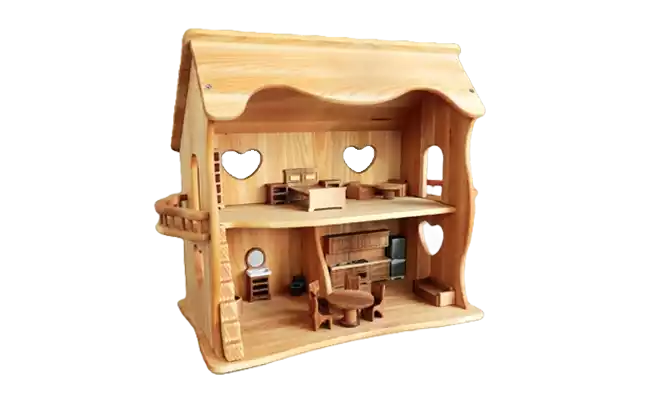
The Wooden Acorn Fairy House, Wooden Beehive House, and Wooden Carrot House each create a small, complete world. At three, a child will immediately understand: this is somewhere to live, somewhere to return to. Combined with the Rabbit Family Set, they become the stage for stories that can last for years.

What to avoid — and why it matters
Battery-powered toys remove agency — the toy does the doing; the child watches. Overly detailed figurines that look exactly like a character from a film can only ever be that character; there's no room for the child's own story. Synthetic finishes and unknown materials matter because toddlers put things in their mouths — always check that finishes are non-toxic and materials are clearly stated. Toys that do too much are not giving a child three experiences; they're giving them one overwhelming one.
A note about materials and safety
All Noelino pieces are made from responsibly sourced hardwood — ash, lime, and linden — shaped with precision using modern woodworking tools and finished by hand. Each piece is sanded through multiple grits, then painted with water-based, non-toxic paints and finished with olive oil. No plastics, no synthetic lacquers, no varnishes that would alter the natural warmth of the wood.
Choosing well
Choosing a toy for a toddler is, in a way, choosing what kind of play you'd like to invite into your home. Loud, fast, and pre-scripted — or quiet, open, and child-led. The latter takes more trust. It requires believing that a child with a smooth wooden rabbit and a small carved house has everything she needs to build a world.
In our experience — and in the experience of the families who have written to us over the years — that trust is almost always rewarded.
If you're not sure where to start, the Wooden Fruits Play Set is a wonderful first Waldorf toy for toddlers. And if you'd like to explore the philosophy behind this kind of play, you might enjoy our article on Waldorf & Montessori philosophy through play.
At Noelino, we make toys for that child.

